
How to Clean Car Mats Without Ruining the Material
Most car mats are not damaged by dirt but by how they are cleaned. Here is the routine for a two-layer mat, and the three things that quietly wreck one.
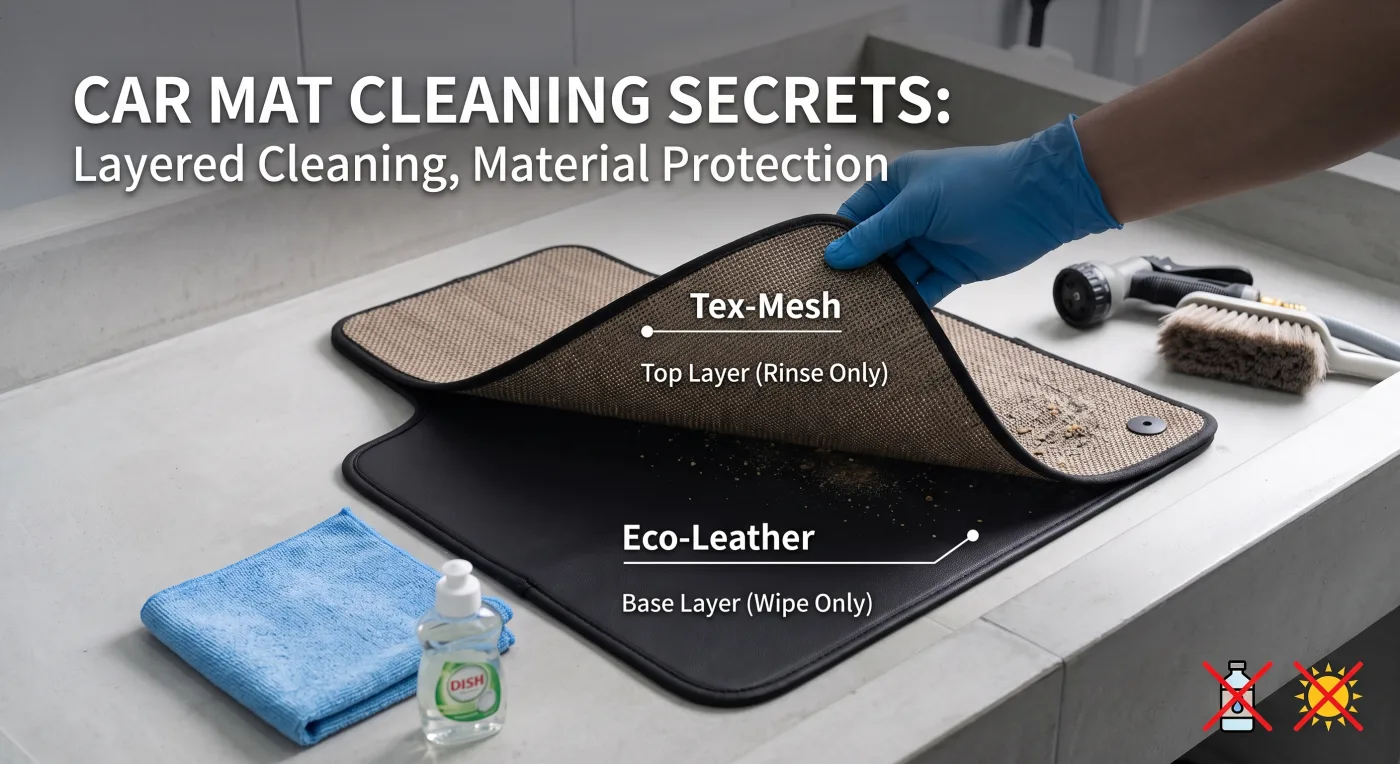
Take the mat apart before you clean it. On a two-layer mat the top and the base are different materials doing different jobs, and the fastest way to ruin one is to treat both the same way — usually with something far harsher than either needs.
Here is the routine, and the three habits that do the real damage.
Lift the top layer off first
An EZYMAT set is two layers. The base is Eco-Leather, a solvent-free protein leather that acts as the waterproof shell between the mess and your original carpet. Over it sits Tex-Mesh — woven fibre with wear-resistant PVC — on the strip your shoes actually land on.
That upper layer is designed to come out. It is the part that collects the grit, the sand and the wet leaves, and it is the part built to be rinsed. Separating the two is not an optional extra step; it is the whole reason the construction works. Cleaning a two-layer mat without lifting the top off is like washing a jacket without taking it off.
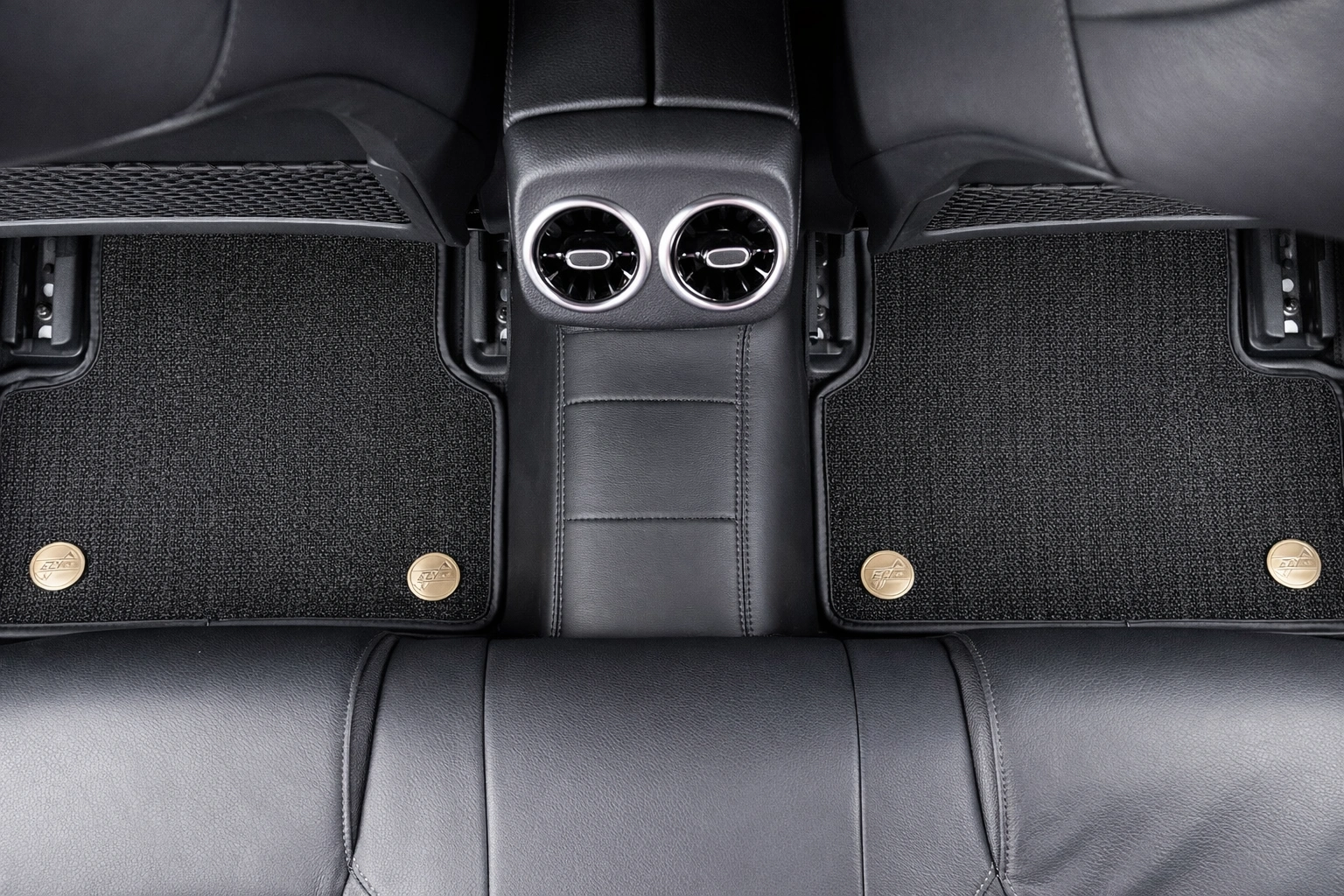
The top layer: hose it, both sides
Take the Tex-Mesh layer out of the car and hose it down on both sides. Not just the face you can see — grit works its way through the weave and sits underneath, which is where it does the grinding.
It drains and dries quickly, which is the point of it. A soft brush helps on anything caked on, but most of the time water and a few minutes are enough. You do not need a pressure washer, and on woven material a pressure washer is a poor idea: it drives grit further into the weave instead of lifting it out.
The base layer: wipe it, do not soak it
The Eco-Leather base does not absorb water, so it does not need to be soaked to come clean. A damp cloth handles ordinary dust and mud.
For anything stuck on, use a soft cloth with plain dish soap, then go over it again with clean water to lift the soap off. Leaving soap on the surface is a small thing that shows up later as a dull film.
Three things that quietly wreck a mat
Solvents. Petrol, thinner and general-purpose solvent cleaners harden the material and make it crack. Nothing on a car mat needs a solvent to remove it.
Direct sun. Drying a mat flat in the shade takes longer and is the only way that does not cook it. Malaysian midday sun on a dark surface is considerably hotter than the air temperature, and that heat is what warps the shape a custom-cut mat depends on. A mat that no longer sits flat is no longer a custom fit.
Refitting damp. This is the one that catches most people, and it is covered properly below.
Drying is the step people get wrong
Both layers go back flat, in the shade, and only once they are completely dry. Not almost dry.
The reason is not the mat. A mat that is still slightly damp underneath sits on your original carpet and holds that moisture against it, and the carpet is what develops the smell. The mat dries out on its own; the carpet under it does not, because nothing reaches it.
If you are cleaning mats on a wet week and they will not dry, it is better to drive with no mats for a day than to put damp ones back.
Why mats smell after rain, and what it actually means
Almost always because water got underneath and stayed there.
Wet shoes carry water past the edge of the mat, or a set that does not fit the footwell properly lets it run around the side. It pools on the carpet, the mat covers it, and it has no way out. Within a couple of days you have a smell that seems to come from the mat and does not.
The fix is the same as the routine above: lift the mats out, dry the floor underneath, dry the mats separately, refit only when both are dry.
If the smell keeps coming back after that, stop blaming the mats. Check the door seals and the air-conditioning drain. A mat cannot cause a leak — it can only hide one, and a recurring smell in a car with dry mats is usually one of those two things.
How often is often enough
There is no schedule that fits everyone. A car that does the school run in a monsoon needs the top layer rinsed weekly; a car that lives in a basement car park might go a month.
The useful signal is grit. Run your hand over the top layer — if it feels sandy, it is due, because that grit is what abrades the surface every time someone steps in. The Eco-Leather we use has been run through a dry Martindale abrasion test to ISO 12947-2 and showed no wear at 100,000 rubs, but that is a test of the material against abrasion, not a licence to leave sand sitting on it. Most of that scuffing lands on the Tex-Mesh layer anyway, which is precisely why that layer is the one designed to lift out and rinse.
After a flood
Same routine, more of it. Take the mats out, hose both sides down, and dry them flat in the shade before they go anywhere near the car again.
Because the material holds no water inside it, a mat that has been through a flood can usually be washed and put back — which is not true of a carpet mat, where the water goes into the pile and stays there. Deal with the floor of the car separately and properly; that is the part that will hold the damp.
If you are replacing a set that did not survive, our 3D floor mats are cut from a template taken off your specific make, model and year, so the raised edge sits where your footwell actually is.