
Are Car Mats Waterproof? What to Look For
Not all car mats keep water out. Learn what makes a mat truly waterproof, how to handle floods, and why trapped moisture underneath matters more.
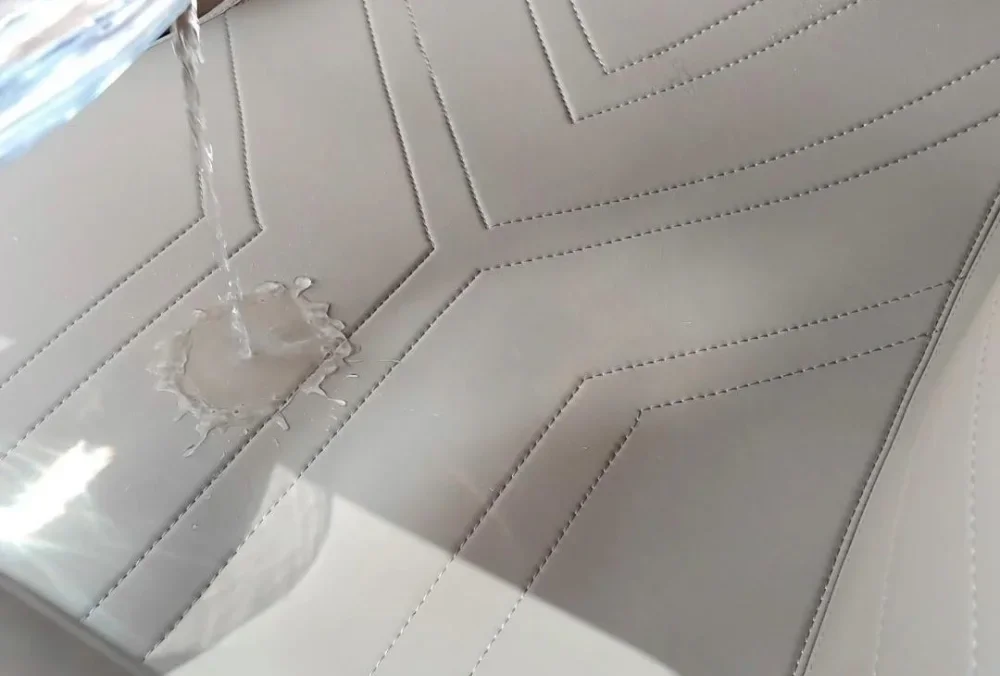
A car mat is waterproof if its base material does not absorb water and its edges are raised enough to contain spills. Most mats sold as “waterproof” are not — carpet and coil mats absorb water, and flat rubber trays let it run off the sides onto your original carpet. Here is what to look for, what to do after a flood, and why the water underneath the mat matters more than the mat itself.
What Makes a Car Mat Waterproof
The word “waterproof” gets used loosely. A rubber tray that holds a puddle and a woven carpet that absorbs everything are both sold as floor mats, but they behave completely differently when your shoes are wet.
Three things separate a genuinely waterproof mat from one that just looks the part:
- Non-porous material. The base layer needs to be a solid barrier — not fabric, not carpet, not woven fibre with gaps between the threads. If water can soak into the material itself, no design feature saves it.
- Raised edges. A flat mat lets water run straight off the sides and onto your original carpet. A mat with a raised lip contains spills, mud and rainwater on the mat where you can wipe it away.
- Separable layers. A one-piece mat traps grit and moisture against the floor. A two-layer design lets you lift off the top layer to rinse it while the sealed base stays in place and keeps the car floor dry.
Our construction uses exactly this approach. The base is Eco-Leather, a solvent-free protein leather that does not absorb water. Over it sits Tex-Mesh, a woven fibre with wear-resistant PVC that lifts out on its own — so the part that gets dirty is the part you rinse. The raised edge holds spills on the mat instead of letting them soak through to the original carpet underneath.
The Real Test — Spills, Mud and Floods
Daily splashes from wet shoes and muddy boots are the easy case. A waterproof mat catches them, you wipe it down when you get home, and the car carpet underneath stays dry.
The harder question is what happens when water gets serious — a drink spills across the footwell, muddy water sloshes in from a construction site, or the car sits in a flash flood.
After a flood, the steps are simple but they matter:
- Take the mats out of the car completely.
- Hose both sides down — top and bottom — to wash off mud and debris.
- Dry them flat in the shade before putting them back.
Because the material does not hold water inside it, a waterproof mat can be washed and reused after a flood. A carpet mat in the same situation usually has to be replaced — it absorbs the floodwater, and no amount of drying gets the smell out of a soaked carpet pad.
This matters more in Malaysia than in most markets. Monsoon season, flash floods in the Klang Valley, and daily tropical downpours mean your mats will get wet regularly. A mat that handles that without rotting is not a luxury — it is basic protection for the original interior.
Why Trapped Water Matters More Than the Mat
Here is the part most guides miss: the problem is almost never the mat. It is the water that gets underneath it.
A waterproof mat does its job — water stays on top, where you can see it and wipe it away. But if water gets between the mat and the car floor through the door sill or from wet shoes stepping past the edge, it sits on the original carpet with a sealed mat on top of it. The carpet cannot dry. That trapped moisture is where mould grows and the smell develops.
If your car smells damp even though the mats look clean, check three things:
- Under the mats. Lift them out and feel the carpet underneath. If it is damp, dry it thoroughly before refitting.
- Door seals. Cracked or worn rubber lets rainwater drip onto the sill and run under the mat.
- Air-conditioning drain. A blocked A/C drain pipe sends condensation straight onto the front passenger floor — the mat hides it, but the carpet underneath gets soaked.
A mat cannot cause a leak. It can only hide one. Solving the smell means fixing the source, not replacing the mat.
How to Check Before You Buy
Not every mat that claims to be waterproof actually is. Before you buy, ask these questions:
- Is the base material non-porous? If it is carpet, coil, or fabric all the way through, it absorbs water regardless of what the listing says.
- Does it have a raised edge? A flat mat lets every spill run off the sides.
- Can the top layer be removed and rinsed? If not, trapped grit and moisture sit between layers with no way to clean them out.
- Is it cut for your specific car? A universal mat leaves gaps at the edges where water gets through to the carpet below. A custom-fit mat that follows the actual floor pan seals those gaps.
Our 3D Floor Mats are cut from templates laser-scanned off the actual vehicle — one template per make, model and year — so the edges sit flush rather than leaving channels for water to escape through.
Cleaning a Waterproof Mat
The two layers come apart and each cleans differently. Lift off the Tex-Mesh top layer and hose it down on both sides — it drains and dries quickly. The Eco-Leather base wipes clean with a damp cloth; for stubborn marks, use a soft cloth with plain dish soap, then wipe the soap off.
Avoid petrol, thinner or any solvent on either layer — solvents harden the material and make it crack. Dry both pieces flat in the shade, never in direct sun, and only refit once everything is completely dry. That last step is the one people skip, and it is what causes the smell.
For the full cleaning routine, see our guide on how to clean car mats without ruining the material.